Osage Nation Museum
Killers of the Flower MoonThe Osage Nation Museum enters the account as both a repository of historical material and a place where the record of violence meets the memories of Osage families. In the office of director Kathryn Red Corn, the researcher encountered a prison letter signed by William K. Hale and heard Red Corn’s account of her grandfather’s suspected poisoning. The two discoveries differed in kind: one was a surviving document, the other a fragmentary family history. Together, they sharpened the question of how many deaths had escaped public notice and official investigation.
A Museum Encounter
The meeting followed a performance of a ballet that traced Osage history through migration across the plains, contact with European explorers and missionaries, and the oil boom, before turning to the Reign of Terror. After the performance, Red Corn asked the researcher how the investigation was going. When the researcher mentioned the possible involvement of H. G. Burt, a man not publicly linked to the killings, Red Corn showed little surprise and invited the researcher to visit the museum the next morning. The invitation shifted the exchange from a discussion in the audience to a direct encounter with an object and a family account.
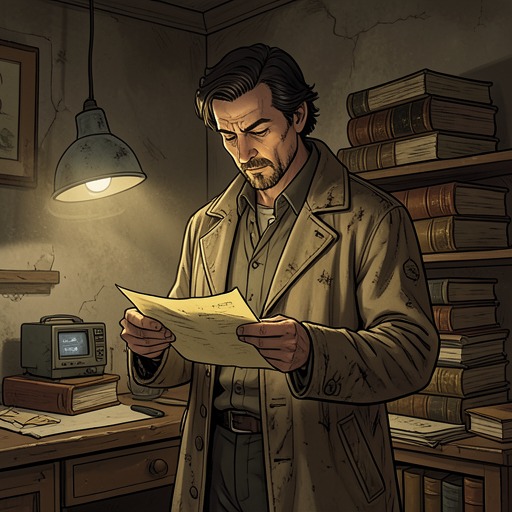
At the museum, Red Corn sat at her desk, surrounded by artifacts. She handed over a brittle letter in neat script, dated November 27, 1931, and directed attention to its signature: W. K. Hale. A descendant had donated the letter to the museum not long before. Its survival gave the institution a specific document through which the researcher could examine Hale’s own words, rather than rely only on accounts of his conduct.
Hale’s Letter
Hale had written the letter from prison to a member of the Osage tribe. Its tone was buoyant: he reported being in perfect health, weighing 185 pounds, and having no gray hair. He said that if released he hoped to return to the reservation, preferring Gray Horse to any place on earth, and represented himself as a lasting friend of the Osage. Those claims sit uneasily beside his imprisonment and the crimes under investigation. The letter records what Hale chose to say about himself; its confident self-presentation does not settle how his words should be judged.
Red Corn’s response conveyed her disbelief at the contrast. The document therefore mattered not just as a piece of correspondence but as an encounter between a perpetrator’s claim of friendship and the history that made the claim troubling. Its date, signature, prison origin, recipient, and route to the museum through a descendant gave the researcher concrete details to assess. The museum made the letter available as evidence, while the meaning of Hale’s assurances remained open to scrutiny.
A Family Account of Suspected Poisoning
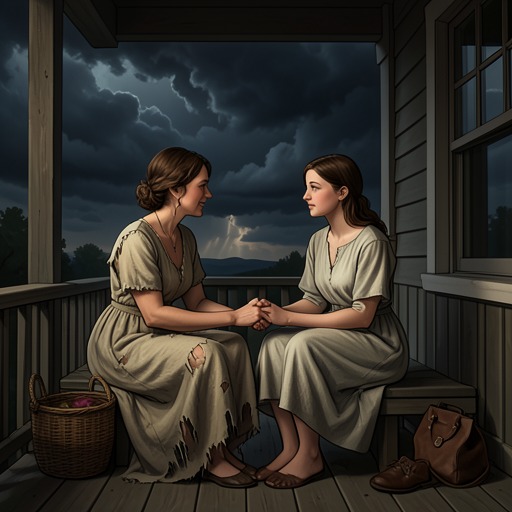
Red Corn had another reason for inviting the researcher. She recounted what relatives had told her about her grandfather, who, after divorcing her grandmother and marrying a white woman, began to suspect in 1931 that his second wife was poisoning him. When relatives visited his home, he warned them not to eat or drink there. He later died at forty-six. Red Corn said he had previously been in good health, and that his wife left with much of the money. The family believed he had been poisoned, but the account was assembled from fragmentary details passed down by relatives; the evidence presented does not establish that poisoning occurred.
The family’s conviction was paired with an account of institutional silence. Red Corn said there had been no investigation, and described undertakers, doctors, and police as covering such matters up. Her story did not supply a documented case file or a complete chronology. Instead, it brought the researcher a lead whose gaps were themselves part of the problem: a death remembered as suspicious, a family that believed it knew what had happened, and no investigation to test that belief. Red Corn hoped the researcher might look into the death.
The Museum and the Unrecorded Dead
The encounter connected the museum’s material evidence to the limits of the historical record. The Hale letter was preserved and could be examined; Red Corn’s grandfather’s death reached the researcher through family recollection, with important details unknown. Red Corn then placed the individual account in a broader frame, saying that many more murders had occurred during the Reign of Terror than people knew about. Her statement did not prove additional murders, but it underscored the scale of what the surviving record might fail to capture.
The museum’s role in the book is therefore specific rather than abstract: its director offered access to a donated letter, provided a family lead, and urged attention to deaths that had not received investigation. The researcher acknowledged the museum and its staff among the institutions and workers critical to the project, naming Red Corn as its former director. In this account, the Osage Nation Museum is a setting where documents and testimony do not erase uncertainty; they make it possible to see where the evidence ends, where family memory begins, and how much may remain unrecorded.